TOP STORIES




-
Bond market volatility knows no end
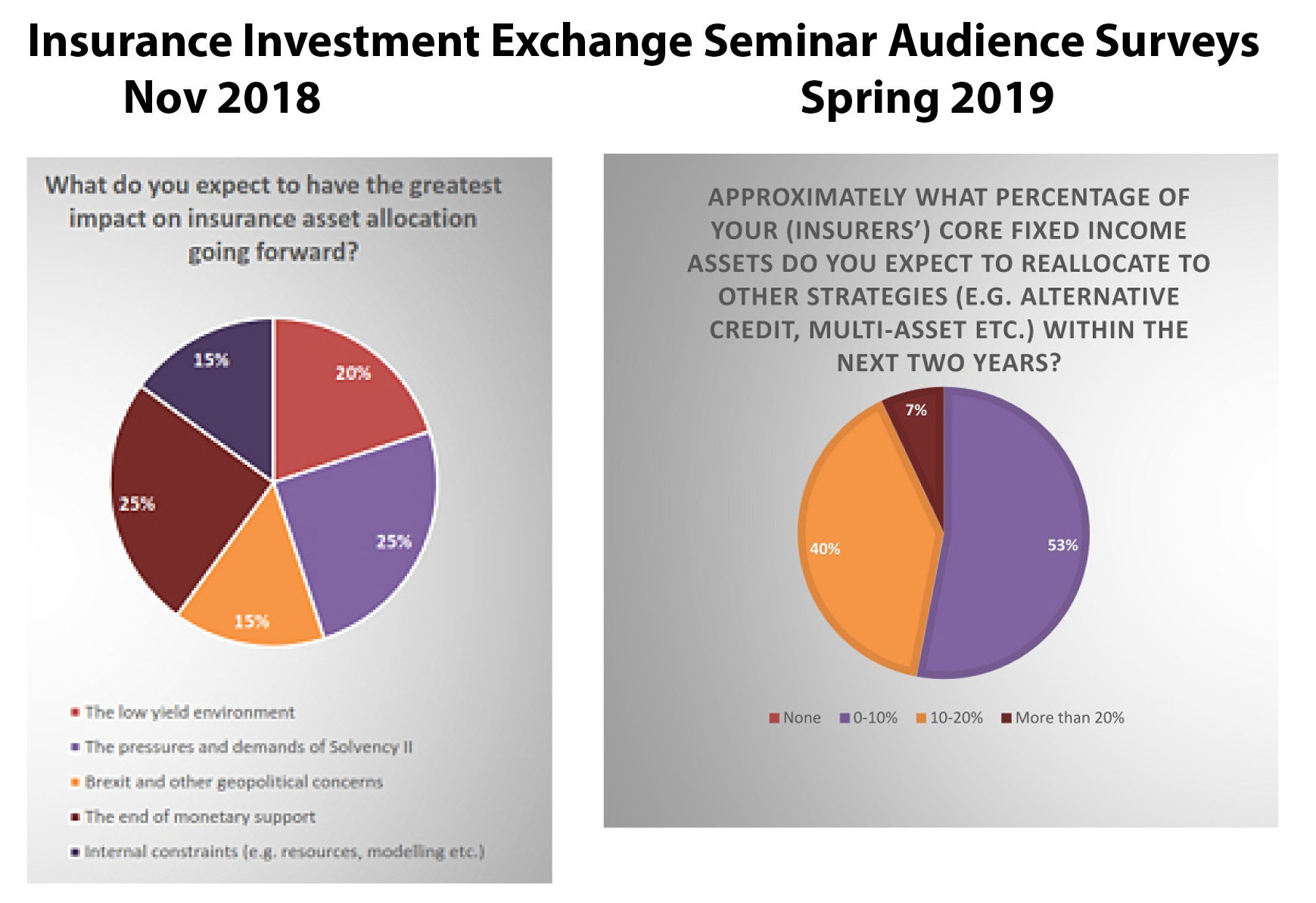
Just a few years ago surveys of insurance company chief investment officers at Insurance Investment Exchange events threw up some consistent common themes and concerns, among them depression over low yields on fixed income assets and a fear of growing volatility.
How times change, writes Contributing Editor David Worsfold.
Their hopes for bond yields to lift off their post-Global Financial Crisis floor might have been realised but only at the price of living with a degree of market volatility that few have experienced and, frankly, none predicted. The upward trend of bond yields would have almost been greeted with incredulity in the middle of the last decade.
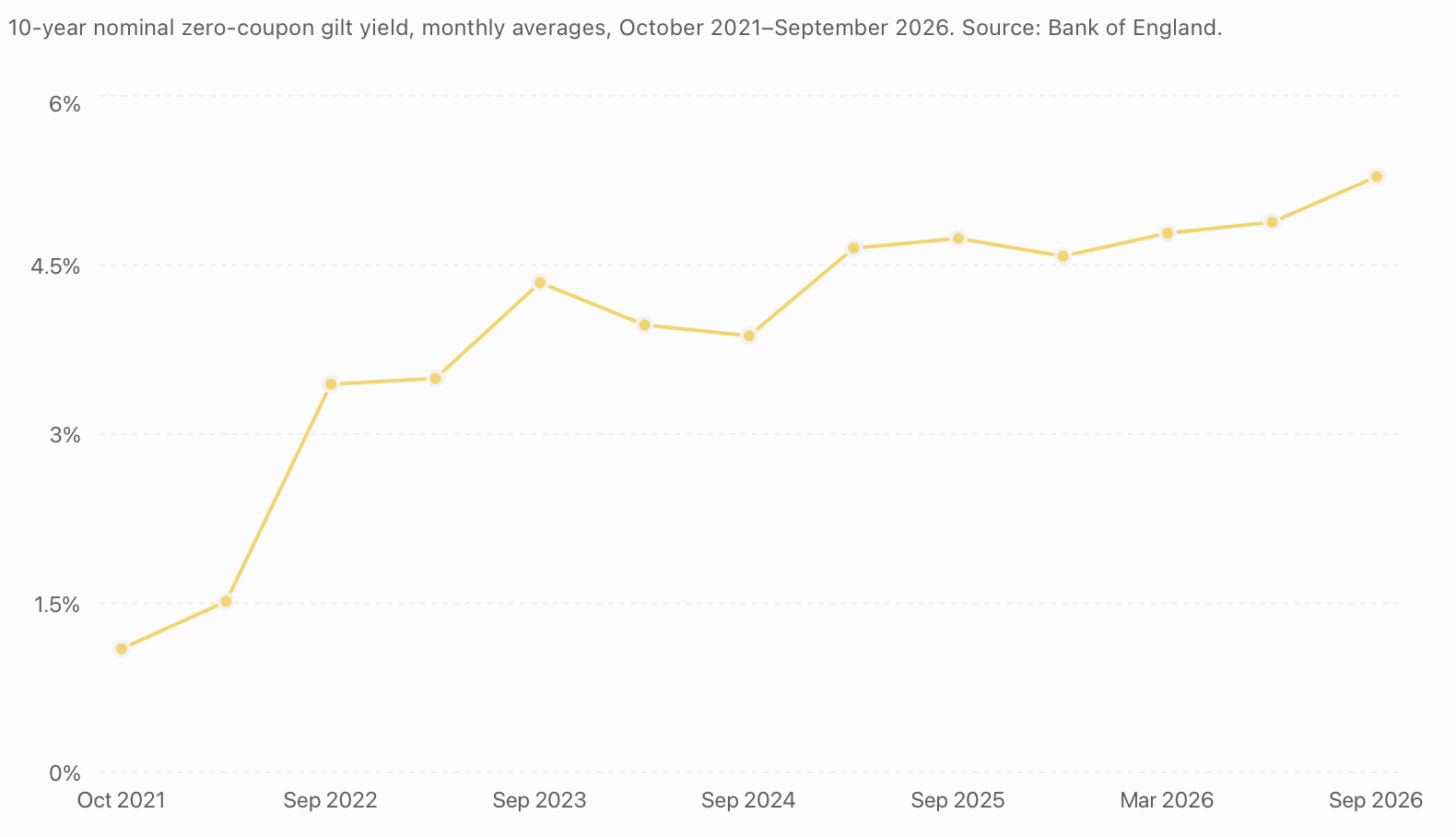
The graph shows UK bond yields but the picture is the same wherever you look in the bond market. More than 80% of global bonds now yield above 4%, versus 6.3% five years ago.
We all know there are intense pressures on financial markets that were unforeseen, especially in the combination we are now witnessing. Inflation in most developed countries is pointing upwards, government debt is at records levels, geo-political crises have hit energy markets hard and the AI boom is a voracious consumer of capital.
For institutional investors, the challenge has been learning to ride this volatility. Bonds, of course, remain an indispensable part of portfolios but within that imperative there are nuances around selection, hedging exposures and duration risk.
This has been underlined in the last week with the fresh concerns around the sustainability of French government debt, highlighted in an investment update from Blackrock:
“France shows why selectivity matters across fixed income though. Its 10-year yield has jumped about 100 basis points since early August to nearly 5%, reflecting the broader rate reset. Yet the widening spread over German Bunds shows investors are also demanding additional compensation for France's fiscal and political risks. This underscores why investors need to distinguish between the forces driving yields higher.”
Any country-by-country selectively is perhaps being masked by the general shift towards sovereign debt. Research by JP Morgan found that European insurers have been increasing their exposure to sovereign debt with portfolios shifting from an approximately even split between government and corporate bonds towards a 60:40 weighting in favour of government securities.
However, the Global Insurance Investments Survey from Mercer and Marsh found that 57% of insurers intended to increase private credit allocations over the next year, compared with 48% planning increases in public investment-grade fixed income assets.
This all suggests that previous assumptions about the safety and resilience of sovereign debt have been shaken by events and that more active management is now the order of the day.
A survey of North American institutional investors by Schroders highlighted this new mentality. It found that 79% expected greater market volatility over the coming year, while 82% believed more pro-active management would be necessary to achieve their investment ambitions.
This is not just a European or North American challenge. Elsewhere, insurers are also playing the selectivity card.
Japanese life insurers are signalling they will maintain or increase purchases of domestic bonds, a trend that has been noticeable throughout 2026. Insurers have been net buyers of superlong Japanese Government Bonds for the past four months, according to Japan Securities Dealers Association data, all good news for the Japanese government that is expected to launch a series of debt auctions during the autumn.
The conclusion of all this research is that Insurers and other major institutional investors are finding their feet in this very changed world. Just how changed is demonstrated by the sentiment surveys of our audiences before Covid-19 and then the Russian invasion of Ukraine started to reshape our world.
-
AI: a double-headed monster or super-charged saviour?
Asset managers and institutional investors are not alone in grappling with the daily escalation of challenges that artificial intelligence is posing. But they face a twin dilemma: assessing its value and impact on their businesses while also embracing it as the biggest investment opportunity – or threat – for a generation.
Views may differ on AI. At the extremes there are dystopian visions of the world where humans are subjugated by robots to those who dismiss it as another over-hyped technology. Almost certainly neither are right but what we do know is that none of us can ignore it and almost everyone has a view on it, writes Contributing Editor David Worsfold.
There is a parallel debate around the unprecedented levels of investment in AI platforms and the data centres that power them which lurches from over-hyped talk of an unending boom to gloomy forecast of a catastrophic bust.
Among the recent deluge of reports that has landed in my inbox are two that capture the extent of the challenges asset managers and institutional investors face.
Some new research from Clearwater Analytics has identified serious concerns among asset managers about the risks it introduces, from data governance to regulatory compliance.
Its GenAI and the Data Divide report, which polled insurance asset managers, hedge funds, private markets specialists and general asset managers, found that while AI offers clear efficiency and alpha-generation opportunities, it also introduces new vulnerabilities that inject caution and nervousness about the rush to adopt AI.
There is a growing gap between adoption and readiness. Nearly two-thirds (62%) are concerned they lack the skills and experience to use AI effectively, with 43% describing themselves as very concerned.
Another key finding swings the spotlight on organisational culture, something that is increasingly being identified as a major blockage across the financial sector. More than half of the respondents (52%) fear internal culture and resistance to change will slow adoption and readiness. Other experts have warned that this can lead to staff doing their own thing, often referred to as “shadow AI”.
Placing too many restrictions on how AI can be used has seen employees in some firms using AI tools outside the corporate environment, which can lead to client and proprietary data entering the public domain, creating a wide commercial and regulatory risk.
Souvik Das, CTO at Clearwater Analytics, said: “What struck me most in this research is how often the same root cause appears, no matter which risk we asked about. Underneath the concerns about skills, culture, governance, and compliance sits one common thread. Firms don’t yet fully trust the data feeding their AI.”
The investment dilemma
Assessing where to place your bets – and clients’ money – as the race to dominate the development of AII accelerates and intensifies is the other aspect of the AI revolution that no insurer investment team can ignore. At the heart of this race is the battle for leadership between the United States and China, says specialist fund manager Robocap.Its recent study with senior executives at insurance asset managers, pension funds, family offices and wealth managers managing assets of US$513bn found this group believes the US will have to share overall AI global leadership with China within five years as the gap between the countries narrows.
Drilling down into the results reveals that 56% believe the US and China will be joint leaders in the global AI race, with just a third expecting the US to maintain its current market leading position. Only 2% believe China will overtake the US.
This is despite China already leading the AI race in specific areas such as volume of AI patents, the production of research talent and some physical AI applications in robotics, but the US is widely considered the current leader due to its dominance in private investment, high-end semiconductor design and the design of the world’s most powerful frontier models.
The research also produced a surprisingly long list of other countries that these major investors will be watching, including the UK, but also the UAE and Saudi Arabia as they have set out their stalls to become global AI hubs for research and data centres over the next five years. Around 60% believe they will be very successful.
Jonathan Cohen, Founder and CIO at Robocap, said: “The clear message for investors is that they have to think globally and look beyond the traditional powerhouse of the US and be open to opportunities worldwide.”
Keeping track of these twin impacts of AI will be the dominant topic of conversations across the sector for years to come.
• Image generated using Adobe Studio
-
Can nature be an asset class?
The push-back on high profile ESG (Environment, Social and Governance) strategies has not stopped the growing interest among institutional investors in exploring how supporting nature and the natural world can be integrated into their approach to non-traditional assets.
No-one is pretending that this is top of the list for any chief investment officer (CIO) but the enthusiasm for all things ESG of a few year ago has not just evaporated, especially at board level, writes Contributing Editor David Worsfold.
With many insurers finding their involvement in fossil fuels, either as insurers or investors, or both, being questioned, they are still looking for ways of appealing to the strong environmentalist lobby that has certainly not gone away or been silenced. Supporting nature, promoting biodiversity and influencing major infrastructure projects to be more sensitive to their impact on the natural world are all valuable in creating stories that counter the bad-boy image many feel the world’s major insurers deserve.
Alongside that reputational dimension is the impact of climate change on them as insurers, with claims from climate-related weather incidents rising all the time. Global insured losses from natural catastrophes have been growing at roughly 5–7% per year in real terms since the 1990s, according to the Swiss Re Institute. since 2020, insured losses from natural catastrophes have exceeded US$100bn annually for six consecutive years.
Swiss Re estimates that annual insured catastrophe losses could reach around US$150bn a year in the next decade.
This has significant implications for solvency and capital requirements so it is no surprise that insurers are looking at how they might use their huge investment portfolios to mitigate these threats.
While institutional investors already gain exposure to nature through a wide range of assets and investments (see list), discussion about whether nature will emerge as a distinct asset class is gathering momentum.
• Sustainable forestry
• Regenerative agriculture
• Farmland
• Water infrastructure
• Carbon-credit projects
• Biodiversity credits
• Natural capital funds
• Renewable energy
This has been helped along by a range of organisations such as the World Economic Forum, UN Principles for Responsible Investment, and the Taskforce on Nature-related Financial Disclosures, all of which have promoted frameworks for measuring nature-related risks and opportunities. These are creating the foundations of a tentatively emerging asset class.
Supporters of treating natural capital as a distinct asset class argue that it would create visibility, standardisation and scale. They also point to other features that should appeal to insurer CIOs, including returns that are not likely to be neatlycorrelated with other major assets in their portfolios and which do not move in line with broader economic trends. They may already hold some assets that are heavily invested in farmland and forestry which often perform well during inflationary periods.
At a recent Investing in Nature event, a panel session explored some of the pros and cons of creating a distinct nature-related asset class or integrating nature deeper within existing investment frameworks, such as infrastructure, property and private equity. The consensus was that the latter approach was more likely to win favour.
The panel moderator, Charlotte O’Leary, CEO of Investors with Purpose, summarised her thoughts on the session in a LinkedIn post.
• Nature can be a liability (nature loss) and an asset, so how you are recognising it in your accounting and investments matters.
• Nature solutions can be uncorrelated, act as an inflation hedge and produce competitive returns but demand is needed, upfront due diligence costs have to be recognised and addressed (perhaps through syndication), and investors need to support a conducive policy environment.
• Every hand went up when I asked the audience if they thought pension funds should invest in nature. Ultimately demand drives everything else.
• Inequality (particularly income/wealth) is intrinsically linked with achieving positive nature outcomes.
• We need transparent nature markets, BNG [biodiversity net gain] and a recognition that outcomes and additionality need to be delivered alongside returns.It seems unlikely that we see a distinct assert class created around natural capital any time soon but that there will be gradual evolution as more consensus emerges around definitions, measurement and reporting standards.
Nature will grow in importance and take its place alongside wider climate risk considerations and be gradually integrated into institutional portfolios.
-
Regulatory simplification gathers momentum in Europe as UK presses on with competitiveness agenda
Calls for regulatory simplification from European insurers have met with a positive response from the principal regulator, the European Insurance and Occupational Pensions Authority (EIOPA).